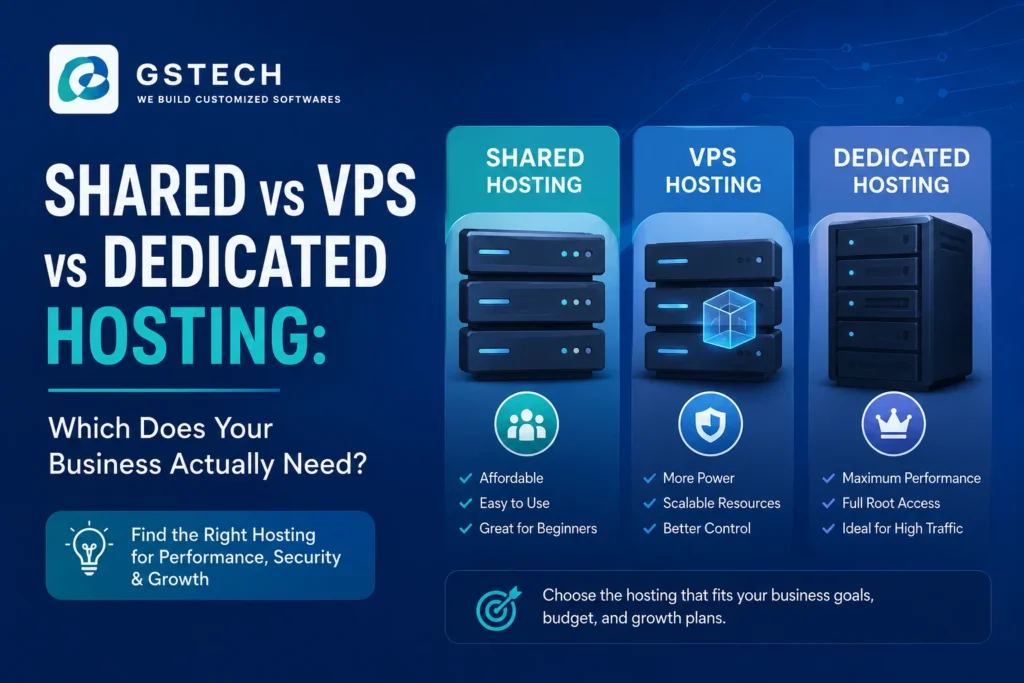
Shared vs VPS vs Dedicated Hosting is one of the most important decisions when choosing web hosting for a business website. Understanding the differences between these hosting types can help you improve website performance, security, and scalability while staying within budget.
Choosing the right hosting solution directly impacts your website’s speed, security, scalability, and overall performance. Whether you’re starting a small business website, running an online store, or managing a high-traffic corporate platform, understanding the differences between Shared Hosting, VPS Hosting, and Dedicated Hosting will help you make the right investment.
What Is Shared Hosting?
Shared Hosting is the most affordable hosting option available. Multiple websites share the same server resources, including CPU, RAM, and storage. This makes it an excellent choice for startups, personal blogs, and small business websites with low to moderate traffic.
Best for: Small business websites, brochure sites, blogs, and any site with low to moderate traffic that doesn’t process sensitive transactions.
The trade-off: Because resources are shared, a traffic spike on another website on the same server can slow yours down. Security is also a shared concern — if another site on the server gets compromised, it can occasionally affect neighbouring sites depending on the host’s isolation setup.
What Is VPS Hosting?
VPS stands for Virtual Private Server. You’re still sharing a physical machine with other users, but the server is partitioned using virtualization software so each user gets a dedicated slice of CPU, RAM, and storage that nobody else can touch.
Best for: Growing businesses, ecommerce stores, membership sites, and any website that has outgrown shared hosting but doesn’t need an entire physical server to itself.
The trade-off: VPS plans cost more than shared hosting and often require more technical knowledge to manage, unless you choose a managed VPS plan where the host handles server administration for you.
What Is Dedicated Hosting?
Dedicated hosting gives you an entire physical server, with zero resource sharing. Every bit of CPU, RAM, and storage belongs to you alone.
Best for: High-traffic websites, large ecommerce platforms, and businesses with strict compliance or security requirements that mandate full control over the hosting environment.
The trade-off: This is the most expensive option, and it typically requires a dedicated IT resource or managed service to maintain properly.
Side-by-Side Comparison
- Shared Hosting: Lowest cost, easiest to set up, best for low-traffic sites, least control and isolation.
- VPS Hosting: Mid-range cost, dedicated resources, scalable, good balance of control and affordability.
- Dedicated Hosting: Highest cost, full server control, best performance and security, requires technical management.
How to Decide Which One You Need
Ask yourself three questions: How much traffic does your site actually get each month? Does your business handle sensitive customer data or payments? And how much do you expect to grow over the next 12 to 24 months?
If you’re a small business with a few hundred visitors a day and a simple website, shared hosting is genuinely fine; there’s no need to overspend. If you’re running an online store, a membership platform, or anything that’s started to feel sluggish under normal traffic, VPS hosting is usually the right next step. Dedicated hosting only makes sense once you’re dealing with serious scale or compliance requirements that demand full server isolation.
Final Thoughts
There’s no universally “best” hosting type, only the right type for your current stage of business. The good news is that most reputable hosts make it easy to upgrade from shared to VPS, or VPS to dedicated, as your traffic and requirements grow, so the decision you make today doesn’t have to be permanent.
If you’re not sure which option fits your situation, it’s worth getting a second opinion before committing to a plan that’s either holding your site back or costing you more than necessary.